EBM Compliance for RRA in Rwanda: What Every Shop Owner Must Know
Every registered business in Rwanda must give an EBM receipt for every sale. Miss one and the fines can be many times the tax, or worse. This plain-language guide explains what EBM is, who must use it, what happens if you don't, and five things to check in your shop this week.

A customer walks into your shop and buys goods for 25,000 RWF. He pays by MoMo. You say thank you, he leaves, and life goes on. No receipt. It feels normal, maybe you have done it a thousand times.
But to the Rwanda Revenue Authority (RRA), that sale never happened. And if RRA finds out, the money you will pay in fines can be far more than the profit you made that whole month.
This guide explains, in simple words, what the EBM system is, who must use it, what happens to businesses that ignore it, and the simple checks you can do this week to protect your business.
What Is EBM, in Simple Words?
EBM stands for Electronic Billing Machine. It is the system RRA uses to see the sales of every registered business in Rwanda.
The idea is simple: every time you sell something, the sale is recorded and a receipt is produced. That receipt is the proof that the sale happened and that the correct tax will reach the government.
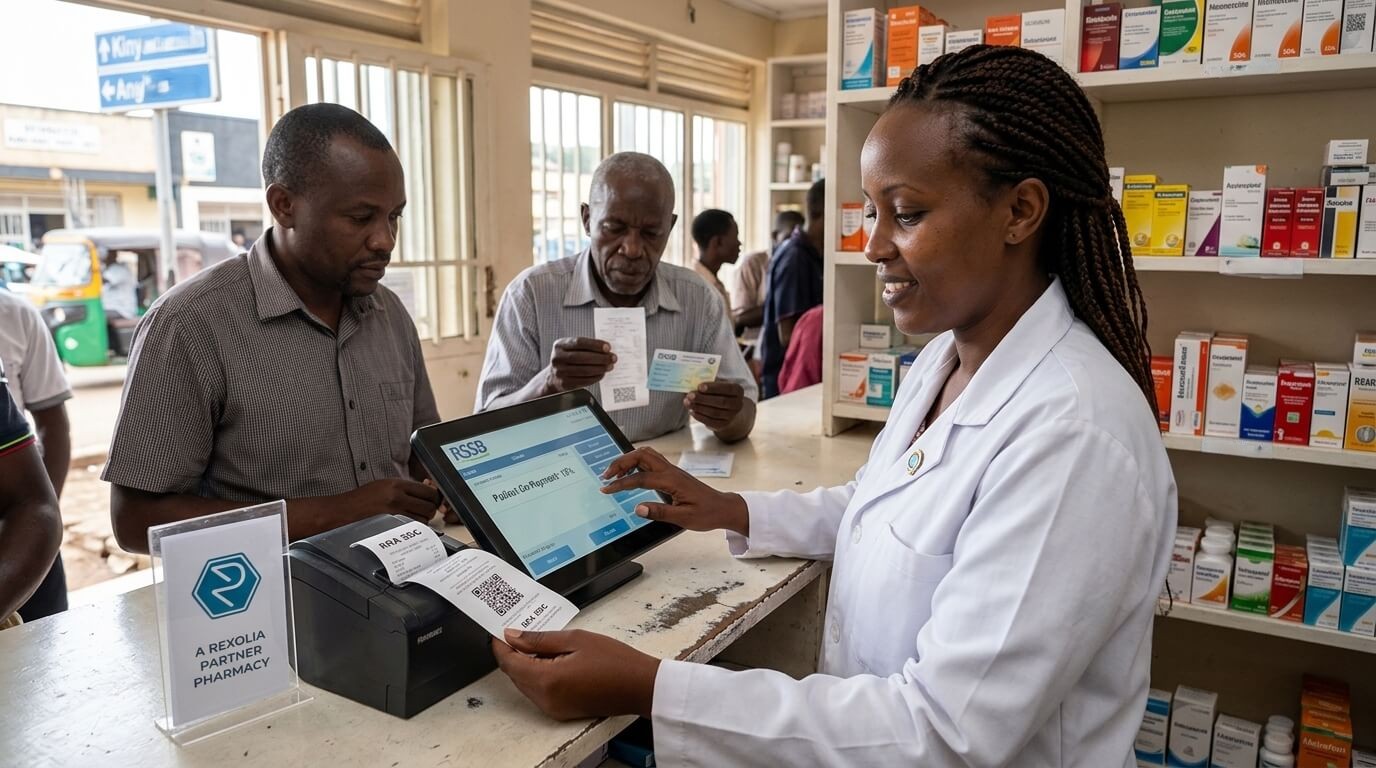
In the past, this was done with a physical machine, a box that sat on your counter and printed receipts. Today, many businesses can do the same thing with certified software on a computer, tablet, or phone. The goal has not changed: every sale, one receipt, recorded with RRA.
Who Must Use It?
The short answer: Every registered business. If your business is registered in Rwanda, you must issue an electronic receipt for every single sale. It does not matter how small the sale is, and it does not matter how the customer pays:
- Cash: sales receipt required.
- MTN MoMo or Airtel Money: receipt required.
- Bank transfer or card: receipt required.
- Credit sale to a customer you know: receipt required.
This applies to pharmacies, supermarkets, boutiques, restaurants, hardware shops, wholesalers, and service businesses. If you are registered and you sell, you must receipt.
What Happens If You Don't Follow the Rules?
RRA takes missing receipts seriously, and the punishments are designed to hurt. Here is what a business that ignores EBM is risking:
- Heavy fines. The fine is calculated from the tax you should have paid, or from the size of the sale and even sometimes a fixed sum irrespective of the sale. A fine can be many times bigger than that tax you were trying to avoid. It can be big enough to break your business.
- Business closure. RRA has the power to close a business that repeatedly refuses to issue receipts. For many owners, even a few days closed costs more than years of doing things right.
- A damaged record. Once RRA flags your business, expect more visits and more checks in the future. The attention does not go away.
Many owners think, "My shop is small, they will never check me." That thinking is now dangerous and the next section explains why.
Your Customers Are Now Part of the System
RRA has made every customer a potential inspector. Through a programme called Tengamara, customers are encouraged to check that the receipt you give them is a real EBM receipt and to report you when it is not.
Why would a customer do this?
Because RRA rewards them. Customers who verify their receipts can get part of the VAT back, and customers who report a business that refuses to give a proper receipt receive a share of the fine.
Think about what this means. You no longer need an RRA officer to walk through your door to get caught. Any customer, on any day, with one phone, can start the process. The only safe position is to give a correct receipt every time, to everyone.
The Machine or the Software; Which One Do You Need?
There are two main ways to produce EBM receipts, and it is worth understanding the difference in plain terms:
The physical machine (VSDC). A certified device sits in your shop. Sales go through it, and it sends the information to RRA. It works, but it is one more piece of hardware to buy, maintain, and depend on. If the device has a problem, your receipting has a problem.
Certified software (CIS). Your sales system itself the software you use at the counter talks directly to RRA. No extra box. The receipt is produced from the same screen where you make the sale.
For a growing business, the software route is usually simpler: one less device, one less thing that can break on a busy Saturday. Whichever route you choose, there is one question that matters most, and we will come to it in the checklist below.
Five Things to Check in Your Business This Week
You do not need an accountant to do these. You can check every one of them yourself:
- Pick up yesterday's receipts. Are they real EBM receipts, from every sale including the MoMo ones? If your cashier sometimes skips receipts for small cash sales, that habit is your biggest risk.
- Ask your supplier one question: "Is this system RRA certified?" Not "does it print receipts". Many systems print receipts that mean nothing to RRA. The word you are listening for is certified. Ask to see the proof.
- Check your prices and product setup. Products must be placed in the correct tax category. A mistake made once, on day one, repeats itself on every receipt until someone fixes it.
- Test what happens when the internet goes down. Sales do not stop because the connection stops. Make sure you know exactly how your system behaves offline before a busy day teaches you the hard way. It is important to know that legally you cannot sell offline for over 24 hours. The system you use must be connected to RRA via internet continually.
- Look at your closing report. At the end of the day, can you see clearly what was sold, how it was paid for, and by whom? If closing the day takes guesswork, errors are hiding somewhere.
One Honest Word: EBM Keeps You Legal. It Does Not Run Your Business.
Here is something many owners discover too late. The EBM receipt tells RRA what you sold. It does not tell you what you have left in stock, which products are about to expire, which cashier had a shortage yesterday, or whether you actually made money this month.
A receipt is proof of a sale. A business needs much more than proof, it needs control. Stock levels, purchase orders, customer records, expenses, and clear daily reports are what turn a busy shop into a profitable one.
This is the gap systems like Rexolia are built to close: the same screen that produces your receipts also tracks your stock, your money, and your customers so following the rules and running the business stop being two separate jobs. Whatever tool you choose, choose one that does both.
The Bottom Line
EBM is not paperwork for paperwork's sake. It is the law, the fines for ignoring it are painful, and your customers are now watching on RRA's behalf.
The good news is that compliance is not complicated once it becomes a habit: every sale gets a receipt, your system is certified, your products are set up correctly, and you check your closing report every day.
Do these things and RRA stops being a fear. It becomes just another part of a well-run business and your energy goes back to where it belongs: growing sales. Receipt every sale. Check your system. Sleep well.